The right tools don't create the story. But they do ensure that you can focus on what matters.
Every production is different. But there are a few constants — items that always come along, regardless of whether we are operating in an office, a desert, or a hospital corridor. Not because we "always need them", but because they fit how we work: fast, sharp, and with complete creative control.
Here’s a look into our bag — or better said: bags.
1. Cameras: reliable and flexible
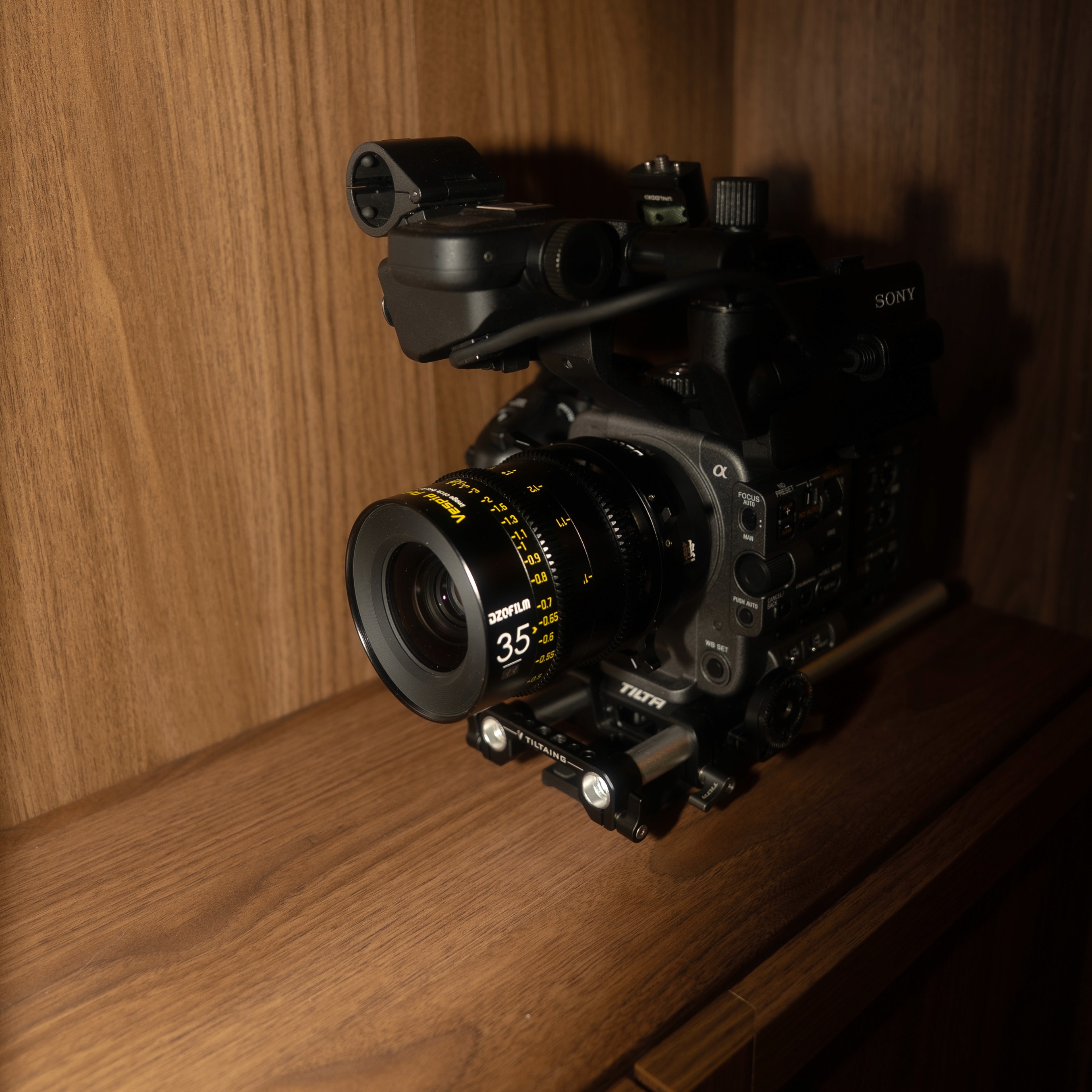
We work with the Sony FX3 and Sony FX6 — compact, full-frame, cinematic output, and reliable under pressure. It is important for us that we can quickly switch between tripod, handheld, or gimbal.
→ Extra to bring: ND filters, extra batteries (lots), and a camera cage with top handle.
2. Lenses: emotion is in the glass
Our go-tos:
24mm f1.4 (for atmosphere and context)
50mm f1.2 (for close & soul)
85mm f1.8 (for distance and focus)
Bright, characterful, and tuned to how we want to frame stories.
3. Audio: underrated gold
We standardly bring:
Rode NTG5 (boom)
DJI Mic 2 (wireless)
Zoom H6 (recorder)
Because bad sound is not only distracting, it is deadly for credibility. And with good audio, you can make space, distance, or silence tangible.
4. Light: small, smart, powerful
We love natural light — but never fully rely on it. That’s why our Aputure MC lights, an Amaran 200X, and a diffusion softbox always come along. They are small, quick to set up, and give immediate control over ambiance.
5. Grip & motion
Manfrotto tripod (quick, sturdy)
Ronin RS3 gimbal
Slider (for steady motion without theatrical movement)
This allows us to set up something that breathes cinema within minutes, without sacrificing speed.
6. Essentials you forget (but we don’t)
Gaffer tape
Reflection board
Power banks
SD cards (always too many)
Mini-monitor
Multitool
Quick snacks (yes, really)
Conclusion
What you bring in your bag says a lot about how you work. At Blueprint Studios, it’s about control and flexibility. About speed without compromising quality. Every item is chosen for a reason — just like every shot we take.
Because good tools don't make a good story. But they do ensure that you can tell it well.